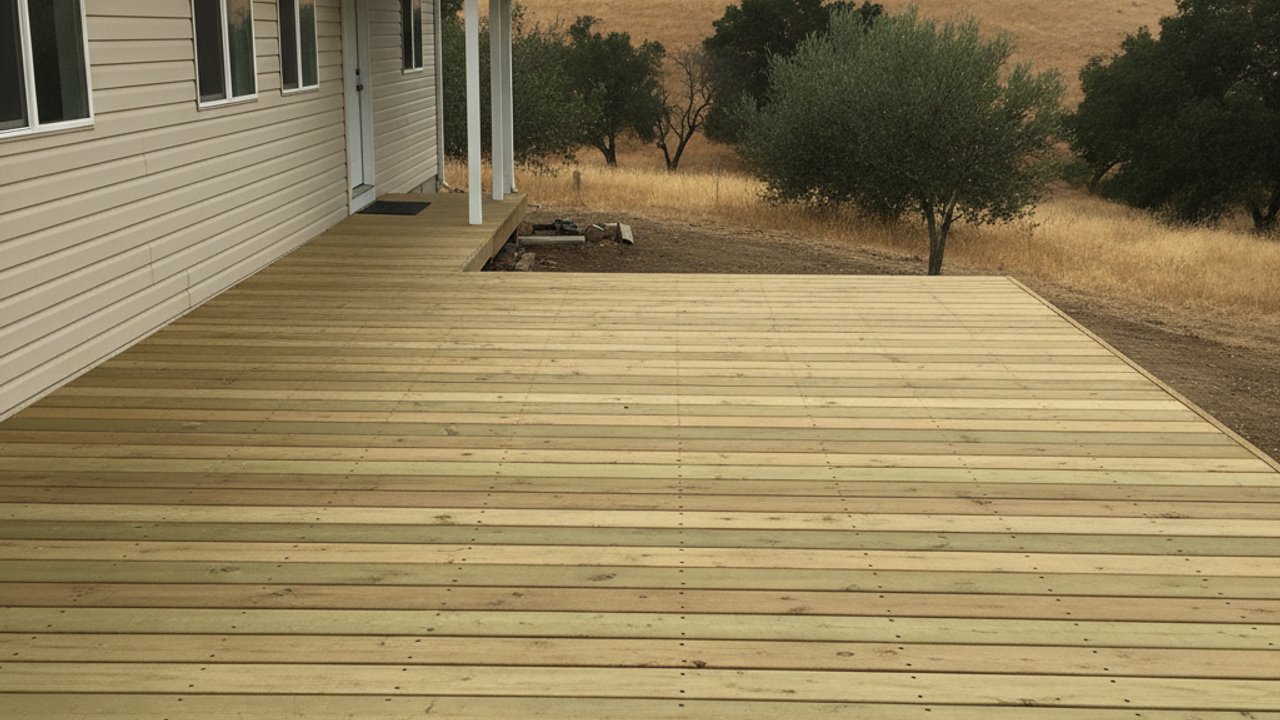
Anyone with a truck and a nail gun can call themselves a deck builder. San Bernardino has enough sun, enough backyards, and enough people wanting to sit outside in the evening that the work is steady, and that draws people who aren't qualified for it. Here's what actually separates a builder who knows this ground and this climate from one who's guessing.
Ask how they're setting the footings
This inland valley doesn't freeze hard, so you're not dealing with a frost line the way a builder in Denver would. But the soil here still moves. Parts of San Bernardino sit on clay that expands when the winter rains soak in and shrinks back down through the long dry summer. Foothill areas near Del Rosa or up toward the mountains have more decomposed granite, which drains fast but doesn't hold a footing the same way compacted clay does. A builder who's worked here should be able to tell you, without hesitating, how deep they're going and why. Twelve to eighteen inches below grade is typical for a residential deck footing in this area, poured on undisturbed soil, not backfill. If someone tells you they're just setting posts on precast pads sitting on the surface, that's fine for a low platform a few inches off the ground. It is not fine for anything attached to the house or anything over 30 inches high, which is also the point where the city starts caring a lot more about your railing height and your permit.
Permits aren't optional, even when contractors act like they are
Inside city limits, the City of San Bernardino Building & Safety Division issues the permit and does the inspections: footing inspection before you pour concrete, framing inspection before the decking goes down, and a final once railings and stairs are in. If your property is in the unincorporated county, it runs through San Bernardino County Land Use Services instead. Either way, a deck attached to the house, a deck more than 30 inches above grade, or anything with a roof or pergola attached usually needs a permit. Some homeowners get talked into skipping it to save time or money. The problem shows up later, at resale, when the buyer's inspector flags an unpermitted structure and the deal stalls or the price drops. A builder who avoids the permit conversation, or tells you "we never bother with that," is telling you something true about how they handle every other corner too. If you're in an HOA neighborhood, which covers a fair number of the newer subdivisions around Rialto and Highland, add the HOA architectural approval to that list before anyone touches a shovel.
Material choice has to answer to the sun, not just the budget
San Bernardino summers push past 100°F for weeks at a time, and the UV here is brutal on anything outdoors. That changes what a good builder recommends. Untreated or under-sealed wood decking will gray, crack, and start splintering within a couple of years if it's not stained. Even a well-maintained wood deck usually needs restaining every two to three years out here, sooner on a south or west-facing deck that gets full sun most of the day. Composite decking handles the UV better and won't need that recoat, but it moves more with heat than people expect, so it needs the right gap between boards, usually around 3/16 inch, to allow for expansion. A builder who installs composite tight against the manufacturer's spec sheet without leaving that gap will hand you a deck that buckles the first really hot July. If your lot backs up to the foothills or falls inside a designated wildland-urban interface zone near the north end of the city, Chapter 7A of the state fire code may require ignition-resistant decking materials and different clearances. A builder who doesn't know whether your address falls into that zone hasn't done enough jobs up there.
Where the water goes matters more than people think
Rain isn't frequent here, but when it comes, usually in the atmospheric river storms that hit in February and March, it comes hard and fast, and a lot of these lots weren't graded with much patience. A deck ledger board bolted to the house without flashing behind it is one of the most common failure points in this trade, anywhere, and it's worse here because homeowners assume the dry climate means they can skip it. Water gets behind an unflashed ledger, sits against the band board, and you don't find out until the wood is soft and the deck is pulling away from the house. Ask specifically whether they're flashing the ledger connection and how. If the answer is vague, that's a deck that fails from the inside, slowly, in a spot you can't see until it's expensive.
What the neighborhood tells you about the job
A deck on a home built in the 1950s or 60s around Arrowhead or the older central part of the city is a different job than one on a newer pad-graded lot in Rialto. Older houses often have ledger connections done to code that no longer exists, band boards that have already taken some moisture damage, and electrical or gas lines run in places nobody documented. Expect a builder working on an older house to spend real time opening things up before quoting a firm number, and be suspicious of a flat bid given without that look. On a newer subdivision lot, the soil is often engineered fill that was compacted during grading, which is generally more predictable, but the setbacks from the property line matter more because those lots tend to be tighter. A licensed builder will check your setbacks against the property survey before designing anything, not after.
What to walk away from
- A bid with no mention of footing depth, ledger flashing, or permits at all.
- A price that's dramatically lower than two other bids for the same square footage and material.
- Someone unwilling to show you a license number or proof of insurance before you sign anything.
- A verbal agreement instead of a written contract with a payment schedule tied to completed stages, not paid up front in full.
- Anyone who tells you a deck attached to your house doesn't need engineering or a permit because it's "just a deck."
None of this is complicated once you know to ask it. Most homeowners just haven't had a reason to learn it before now. If you want someone to walk your specific lot, talk through the soil and the sun exposure, and give you a straight answer on permits before any wood gets cut, that's the conversation to have with Elite Deck Solutions.